Physical Address
304 North Cardinal St.
Dorchester Center, MA 02124
Physical Address
304 North Cardinal St.
Dorchester Center, MA 02124

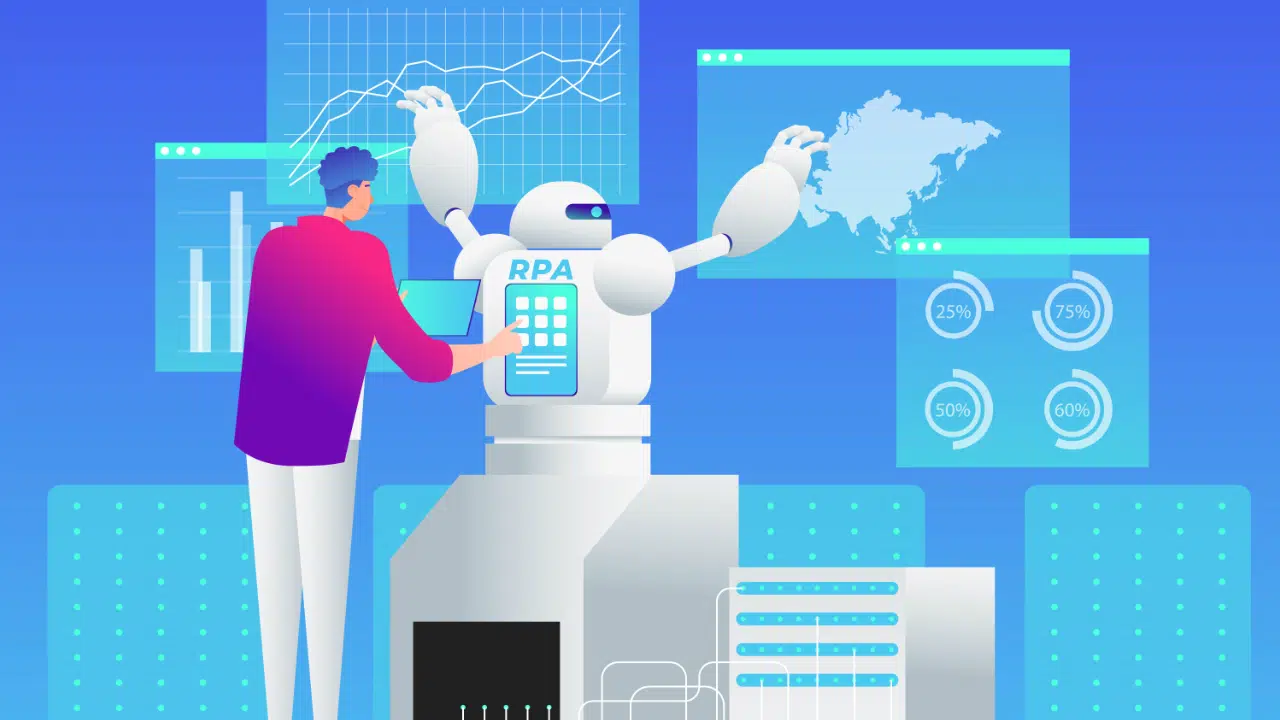
Business process automation is undergoing a fundamental transformation that is forever changing the way we think about productivity, collaboration and strategy. The days when Robotic Process Automation (RPA) was mainly associated with simple bots mimicking clicks in system interfaces are irrevocably passing.
We are entering an era in which competitive advantage is determined not so much by the ability to automate individual tasks, but by the ability to manage an entire ecosystem of digital workers. The driving force behind this revolution is artificial intelligence, which, by extension, has become the core of modern automation.
To understand where we are today, it is worth tracing the rapid evolution of this technology. In the beginning, there was the classic RPA – bots that acted as 'digital hands’. They perfectly handled repetitive, rule-based tasks: copying data between systems, filling in forms or generating reports.
They were reliable, fast and drastically reduced costs, but they had their limitations. They operated on the basis of rigid scenarios and could not deal with exceptions or unstructured data, such as the content of an email or a scan of an invoice.
The next step was to enrich automation with artificial intelligence. Bots gained a 'brain’. Thanks to technologies such as natural language processing (NLP) and machine vision (Computer Vision), they became capable of understanding the content of documents, analysing the sentiment of customer messages and making simple decisions.
This has opened the door to automating much more complex processes that previously required human judgement.
Today we stand at the threshold of the next wave, driven by Agentic AI. Agent AI is no longer just a bot executing commands. It is an autonomous system that can autonomously understand a target, create an action plan, select the right tools (including other bots) and perform multi-step tasks, adapting to changing conditions.
It is this evolution that creates a new challenge: how do we manage a complex environment in which humans, simple RPA bots and sophisticated AI agents must work together?
Managing this complex ecosystem has become a key challenge and also the most important trend shaping the market. This is confirmed by an expert from UiPath, a global leader in automation.
„Business automation is on an accelerated path of innovation – from Robotic Process Automation (RPA), to AI-supported automation, to Agentic AI. The key trend today is AI orchestration – bringing everything together: robots, agents and systems. It enables businesses to coordinate, control and optimise work across complex agent-based processes and systems. This powerful, integrated approach allows humans, AI agents and RPA robots to work together seamlessly, while paving the way for seamless collaboration with the digital workforce of the future.” – says Aleksander Kania, Regional Vice President at UiPath.
What exactly is the AI orchestration mentioned by the expert? The best analogy is a conductor leading an orchestra. The conductor does not play any instrument himself, but his role is crucial. He or she is the one who ensures that each musician (in our case: employee, RPA bot, AI agent) joins in at the right moment, with the right dynamics and in perfect harmony with the rest of the ensemble.
AI orchestration works similarly, performing three key functions:
The AI orchestration approach fundamentally changes the perception of automation. The goal is no longer simply to replace human labour in repetitive activities. The aim is to create a hybrid workforce in which humans and technology work seamlessly together, mutually reinforcing each other’s strongest points.
In such a model, people can focus on tasks requiring creativity, empathy and strategic thinking, while their digital counterparts are busy analysing huge data sets and performing routine operations.
It’s a synergy that allows companies to act faster, make smarter decisions and build real, sustainable competitive advantage in the digital age. Companies that understand the power of orchestration today will be the leaders of their industries tomorrow.